 Hans Schokkenbroek
Three Fascial Maneuvers to Experience
Not golf-specific. This is the actual method behind everything that fixes your swing, try it yourself before you book anything.
You found this because your swing changed and you want to know why. Here's the real answer: it's not really about golf. What's holding your rotation back is the same tissue that runs through your whole body, and the method that releases it wasn't built for golfers at all.
This isn't yoga with a different name
Human Garage, the method behind Fascial Maneuvers, isn't some niche wellness trend. Not a small thing to be certified in. This is one of the biggest self-directed bodywork movements going right now, and almost nobody in golf has heard of it yet.
Here's the actual difference from yoga or Pilates, and it's not a marketing line, it's just true: those ask you to keep showing up, week after week, to hold onto what you've built. Fascial Maneuvers work differently. You release the specific pattern that's been holding you, and it stays released. You're not managing it for the rest of your life, you're done with that particular knot.
No physio. No class. No equipment. 15 minutes, on your own, anywhere.
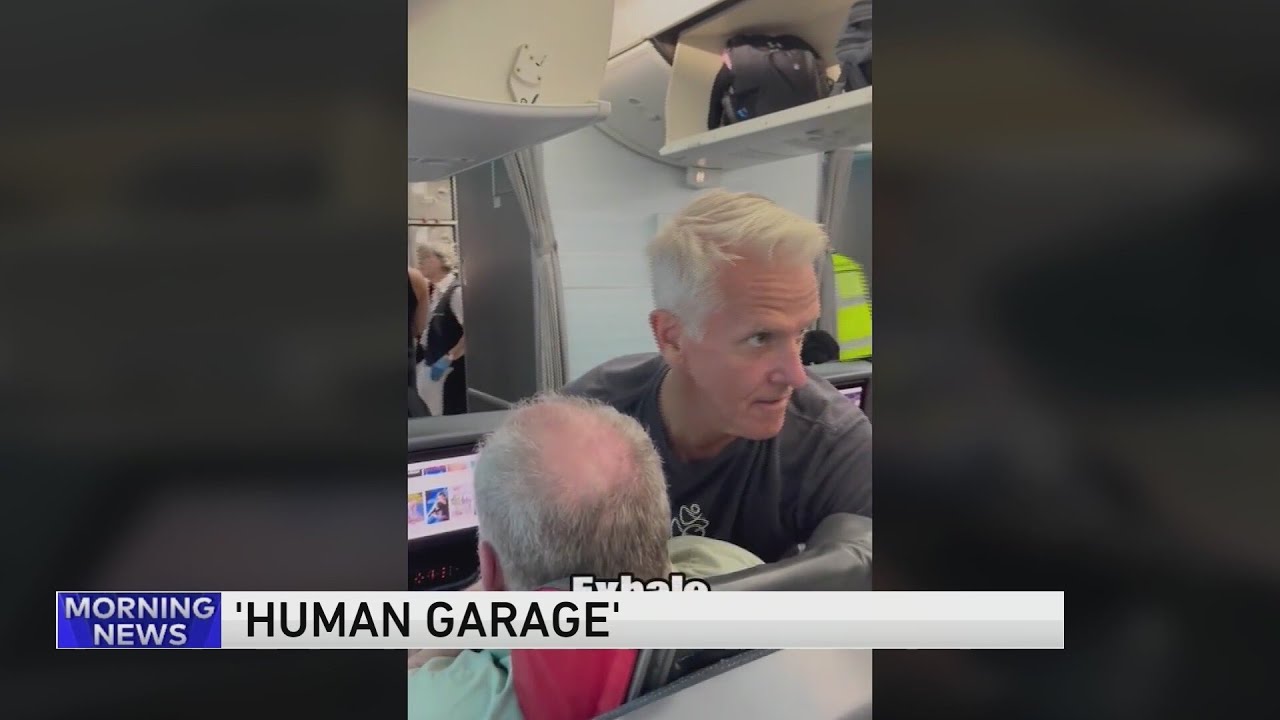
Video: "Founder of 'Human Garage'", WGN News. Independent news coverage, not a Human Garage production.
Designed to radically transform your body in minutes.
Millions practice worldwide. 15 minutes a day. No equipment, just you.
Three Human Garage maneuvers, plus a bonus for your swing
1. Totally Twisted
Full bodyA whole-arm-quadrant torque: pin the fingers, lock the elbow, twist. Small-looking, but it reaches your shoulder and your opposite hip at the same time.
The line worth using: freeing the wrist frees the hip.
Show me the steps
- Stand feet shoulder-width, light brace through your core.
- Extend one arm out, pull the fingers of that hand back toward you and lock them there.
- Pin your elbow to your ribs.
- From that locked position, lift and twist the wrist outward, away from your body.
- Turn your head to the right and your torso to the left, against each other.
- Hold and breathe a few slow breaths.
- Come out slowly, shake the arm out, repeat on the other side.
Reduces global stress, calms the nervous system, releases "feel-good" hormones, decompresses the spine and organs, expands lung capacity. It mimics the fetal position, unlocking torque patterns and redistributing pressure across the body's three zones.
2. Pretzel Squat
Hips & pelvic floorA two-part twist-and-squat that pins your shoulder blade and hip on opposite sides of your body while you counter-rotate.
Show me the steps
- Feet shoulder-width, light brace. Bring your right heel to the arch of your left foot, then step the right foot about three feet away, keeping that same angle.
- Both legs straight, knees locked. Rotate your upper body as far right as you can.
- Left hand reaches out in front of you. Right hand presses into your right glute, pushing back into your own hand.
- Left hand moves to your right shoulder. Right hand slides up your back between your shoulder blades, palm facing out. Turn your head left.
- Squat slowly, holding the position. Six breaths in and out through your mouth.
- Switch arms, right hand to your left shoulder, left hand between your shoulder blades, palm out. Turn your head right. Six more breaths.
- Unwind slowly, walk it off, then mirror the whole thing on the other side.
Opens fascia in the pelvis, reduces hip and low-back tension, reduces glute, hamstring, groin and IT-band tension, balances pressure distribution through the leg, stabilises the knees and ankles while increasing their blood flow. Internal rotation of the arms opens fascia in the legs.
3. Anti-Gravity
Full spinal decompressionA full spinal release, neck to lower back, that ends in a squat and unwinds one vertebra at a time back to standing.
Show me the steps
- Feet shoulder-width, light brace. Interlock your fingers and place your hands at the base of your skull.
- Pull the skin at the back of your neck gently upward, never press forward. Look up toward the ceiling. Three breaths in and out through your mouth.
- Chin slowly to your chest, elbows in tight. Breathe in, hold, look up and to the right, then breathe out back to center. Same to the left. Three each side.
- Widen your stance, soften your knees, hinge your hips back like you're about to sit. Keep looking up, keep the gentle upward pull on your neck. Same breathe-hold-look pattern, three each side.
- Drop into a full squat, chin tucked, elbows pulled in tight. Three breaths in and out through your mouth.
- Coming out: hips rise first, legs straighten, then uncurl your spine one section at a time back to standing, looking up on the last breath. Walk a few steps after.
Spinal decompression, reduces spinal and organ tension, stimulates digestion, calms the nervous system, releases feel-good hormones.
Bonus, for your swing, Swinger
Shoulders & hipsA cross-body pin that locks the fascia between one shoulder and the opposite hip while you rotate against it.
Golf turns your body the same direction thousands of times. This targets the pattern that leaves one shoulder locked and the opposite hip a step behind.
Show me the steps
- Feet shoulder-width, knees slightly bent, hips pushed back into a slight hinge.
- Reach one hand across your body to the opposite shoulder, elbow bent so the arm forms an L-shape.
- Other hand grips the skin on the back of that reaching arm, pulls it toward the elbow, locks the grip.
- Turn your head toward the reaching arm, rotate your torso the other way, pulling the arm across as you turn. Imagine a string attached to your heart lifting your chest up and open.
- Hold and breathe: six breaths, a little deeper and faster than normal.
- Unwind slowly, walk it out, mirror to the other side.
Reduces shoulder and hip tension, reduces shoulder-blade tension, improves athletic performance in swing and throw sports, corrects hip posture and walks more smoothly.
Heat under your hand where you're gripping. A small crack or release. Sometimes a wave of emotion out of nowhere. Sometimes a real ache, even genuine discomfort, while you're holding a position. All of that is your tissue responding to work it hasn't done in years, none of it means something's going wrong.
This is the same method I use with my own golf clients
Just applied to what a golfer's body actually needs. If your rotation, your back, or your recovery time have quietly gotten worse, this is where it actually gets fixed, not just managed.
Book a Session